

Introduction
You snapped at your daughter over a cereal bowl.
Not a raised voice. A proper, disproportionate, where-did-that-come-from snap, over a bowl left in the sink, and you heard yourself doing it. Later you cried in the car outside Pick n Pay for no reason you could name. At 3am you were wide awake, heart going, working out whether you can afford December.
And the thought that keeps surfacing, in women’s own words, almost every time: this isn’t me.
You might be 44. Your periods are still coming, but not as regularly as before, and everyone’s telling you not to worry. Nobody wants to say the word “menopause”, because that’s for women in their fifties with hot flushes, and anyway you feel too young, right? So you’ve put it down to work, or the kids, or your marriage, or worse, blamed yourself.
It may be perimenopause. And the mood part of it, which is the part nobody warns you about, is often the first thing to arrive.
What Perimenopause Actually Is
Menopause itself is one day: twelve months after your last period. For most women that lands somewhere around 51.
Perimenopause is the long approach to it, and it can start in your late thirties or early forties and run for anything from a couple of years to a decade. Your periods may still be regular. Some women have no hot flushes at all.
What’s happening underneath is less a decline than a lurch. Oestrogen doesn’t taper politely downwards; it swings, sometimes higher than it ever was, then drops away. Those swings reach the brain, not only the body, and the brain notices. Think of it less as a cliff edge and more as the Du Toitskloof Pass in fog: you get there, but the road does things you weren’t expecting.
What It Does to Your Mood
The research here is solid, and it’s worth knowing about before you conclude you’re coming apart.
One study followed 460 women in their late thirties and forties, none of whom had ever had major depression. Those who entered perimenopause were twice as likely to develop significant depressive symptoms as those who hadn’t. In a much longer study that tracked women across thirteen years of the transition, 39% had a major depressive episode at some point along the way.
What women describe to me, though, usually isn’t textbook depression. It’s stranger than that:
- anxiety that arrives out of nowhere, in a woman who has never been an anxious person
- Rage. Not irritation. Rage, over small things, often followed by shame
- the 3am wake-up, reliable as an alarm, with the mind already racing
- crying at adverts, then feeling nothing at all for a week
- brain fog: losing the end of a sentence, forgetting a colleague’s name mid-meeting, reading the same paragraph four times
- a sudden collapse in confidence at work, in a woman who has been competent for twenty-five years
That last one does real damage. Women step back from promotions, or leave jobs they were good at, in the middle of this, and only afterwards work out why.
Perimenopause anxiety deserves a paragraph of its own, because it doesn’t behave like the anxiety people write about. It’s often physical before it’s mental: a jolt in the chest on waking, a hum under the ribs all morning, a sense of dread with nothing attached to it. Women tell me they can be perfectly fine at four in the afternoon and frightened of their own kitchen at six. There’s usually no thought to argue with, which is why the usual advice to challenge your thinking lands so badly.
What It Does to the Rest of Your Life
Perimenopause also has appalling timing.
It arrives, for most women, in the decade when the teenagers are at their most demanding, the parents are starting to need help, and the job is at its heaviest. Everyone in the house needs something, and the person they need it from is running on four hours’ sleep and can’t find the word for “diary”.
So everything in the house feels like friction. Partners get the sharp end, and often have no idea what’s going on either. Add low libido, sore joints and the exhaustion, and a marriage that has gone quiet can start to look like a marriage in trouble, when some of what’s happening is hormonal and treatable.
I’m not suggesting every midlife difficulty is oestrogen. Plenty of women arrive in my room in their forties with real and serious problems that have nothing to do with hormones. But when the timing fits, it deserves to be on the list of possible explanations rather than ruled out by default.
Told It Was Stress
Here’s what I hear often enough to call it a pattern. A woman goes to her doctor, says she feels anxious and low and isn’t sleeping, and walks out with an antidepressant and no mention of perimenopause.
Sometimes that’s the right treatment. Depression in midlife is real, and medication helps many people. But UK clinical guidance is pointed about this: there’s no clear evidence that SSRIs ease low mood in menopausal women who haven’t been diagnosed with depression. The same guidance says to consider talking therapy for low mood and anxiety arising from the menopause, and to consider HRT for menopause-related low mood.
South Africa is behind on this conversation. We have no national menopause policy, workplaces are only beginning to talk about it (Discovery launched a menopause support app for members this year, which tells you both that things are shifting and how low the bar was), and many women’s mothers simply never discussed it. So women arrive at 45 with no map, and assume the problem is them.
If you take one practical thing from this post, make it this: go back, and ask the question directly. “Could this be perimenopause?” Write down what’s been happening and when, bring it with you, and if you’re brushed off, see someone else. A GP with a special interest in menopause, or a gynaecologist, is worth the trip.
What Actually Helps
Before anything else, write things down for a month. Dates of periods, the nights you woke, the days the anxiety was bad, the days the fog was thick. It sounds like homework, and it is, but a page of your own notes changes a seven-minute GP appointment completely. It also shows you a pattern you can’t see while you’re inside it, which is usually the first relief: this comes and goes, and it tracks with something.
I’m a counsellor, not a doctor, so the hormone conversation belongs with your GP or gynae. What I can speak to is the rest of it, and the rest of it matters more than women are usually told.
Sleep first, because so much else depends on it. Perimenopausal insomnia is its own beast, and the usual advice is thin, but a cool dark room, a consistent wake-up time and a hard look at the evening wine all earn their place. Alcohol in particular tends to behave differently now: two glasses that used to be relaxing can mean a 2am wake-up and a day of jangling anxiety.
Movement helps mood here more reliably than almost anything else I see, and it doesn’t have to be punishing. Walking the promenade counts. Strength work is worth adding, for your bones as much as your head.
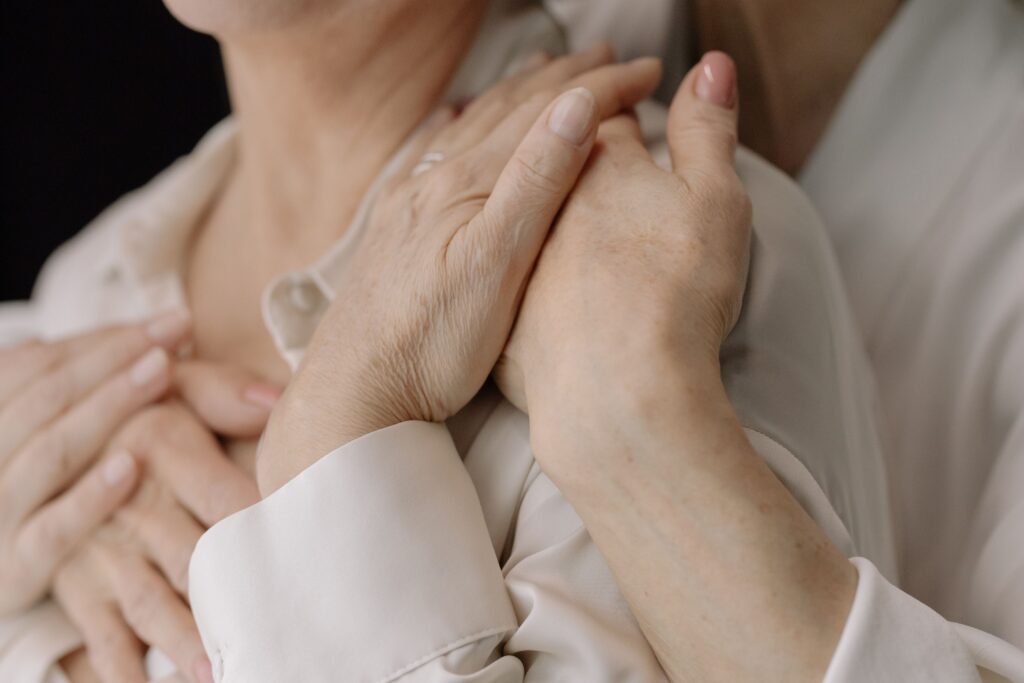
Then the social part, which so many skip. Tell someone. A friend in the same decade, your partner, a sister. The isolation does as much damage as the symptoms, because in private you tend to be far harder on yourself than you would be on anyone else going through the same thing.
And talking therapy is in the guidelines for a reason. It won’t top up your oestrogen, but it works on the sleep, the anxiety, the catastrophic 3am thinking, and the sense that you’ve lost the thread of who you are.
One more thing on the practical side. Medical aid cover for this is uneven, and a gynaecologist visit is not cheap, so it’s worth phoning your scheme and asking what’s covered from day-to-day benefits before you book. Some women get further, faster, with a GP who has a special interest in menopause than with a specialist they can only afford to see once.
When It’s More Than Perimenopause
Some things need more than lifestyle changes and a sympathetic ear.
If you’ve been flat for weeks rather than up and down, if nothing holds your interest, if you’ve been running on empty for months with no recovery, or if you’ve had depression before, take it seriously now. In that thirteen-year study, 59% of women with a history of depression had an episode during the transition, against 28% of women without one. A previous episode is the strongest predictor there is, and it’s a reason to get support early rather than wait and see.
If you ever find yourself thinking you’d rather not be here, please reach out that day. SADAG’s 24-hour suicide crisis line is 0800 567 567, and they offer free telephonic counselling on 0800 20 50 26 between 8am and 8pm.
How Therapy Helps
Most women who come to me in this stretch aren’t looking for a diagnosis. They want to stop feeling like a stranger in their own life.
Some of the work is practical: the sleep, the anxiety, the coping when everyone in the house wants something. Some of it is about the relationships that are straining under it, therapy can help carry you through it without having to decide on anything until you’re ready to.
And some of it is quieter, and closer to grief. Midlife asks hard questions at exactly the moment you have the least capacity to answer them. Who am I now that the children need me less. What was that career for. Is this the marriage I want for the next thirty years. Those questions are worth taking seriously, and they’re far easier to think about with someone else in the room, and when you’ve had some sleep.
Conclusion
You’re not losing your mind, and you’re not failing at a life you used to manage perfectly well. Your body is in the middle of something significant, and nobody handed you the information.
Get the medical side looked at properly. Tell someone what’s been going on. And if the mood part is the part that frightens you, that’s workable, and it’s what I do.
I offer support for women in person in Claremont (close to Rondebosch, Newlands, Kenilworth and Wynberg) and online across South Africa.
It isn’t your character. It’s a chapter.
About Me
I’m Paula Marais, a registered specialist wellness counsellor based in Claremont, Cape Town. I hold an Honours in Psychology (Unisa) and a Master’s in Creative Writing (UCT), and I’m registered with the Association for Supportive Counsellors and Holistic Practitioners (ASCHP).
I offer individual and couples counselling, in person in Claremont and online across South Africa. Online sessions are equally as effective as in-person sessions.
There’s no pressure and no judgment. You can reach me at info@paulamaraistherapy.com or on WhatsApp at 072 633 7661.
#Perimenopause #PerimenopauseAnxiety #MenopauseSA #MidlifeWomen #WomensHealth #BrainFog #MenopauseSupport #MentalHealthSA #HormonesAndMood #CapeTownTherapist #ClaremontCounselling #CounsellingCapeTown #OnlineTherapySA #PaulaMaraisTherapy