
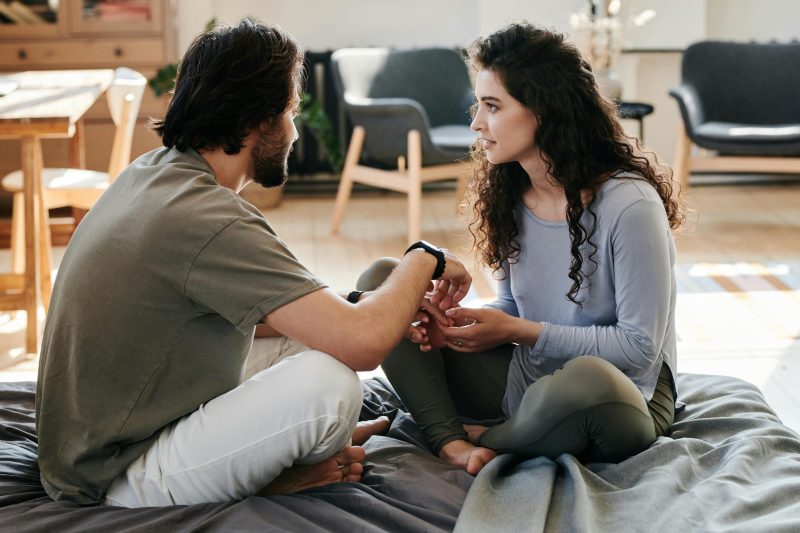
In my time in couples counselling, I have come to believe that most relationship difficulties are not really about what couples argue over. They are about how they communicate. Or, more often, how they don’t.
Communication is the living thread that runs through every aspect of a relationship. It shapes how safe you feel with your partner, how loved, how seen, and how valued. When it works well, it can hold a relationship together through some of life’s most difficult seasons. When it breaks down, even small disagreements can grow into painful distance.
The good news is that communication is a skill. And like any skill, it can be learned, practised, and strengthened. That is exactly what couples counselling helps you do.
Why Communication Breaks Down in Relationships
It rarely happens suddenly. Communication in a relationship tends to deteriorate gradually, often without either partner noticing until the gap has grown quite wide.
Life gets busy. Old patterns take hold. One person shuts down while the other escalates. Words get said in moments of frustration that linger long after the argument ends. Needs go unspoken because it feels safer not to ask. And slowly, two people who love each other can begin to feel like strangers sharing a space.
Research from the Gottman Institute shows that the way couples communicate during conflict is one of the strongest predictors of long-term relationship health. It is not the presence of conflict that matters most, but whether partners can stay emotionally connected through it.
If any of this resonates, you are not alone, and it does not mean your relationship is broken. It means something important needs attention.
Four Communication Skills That Couples Counselling Teaches
In my practice, I work with couples to rebuild the foundations of connection. These are four of the most transformative communication skills we develop together.
1. Active Listening: Hearing Your Partner Without Interrupting
Active listening sounds simple. It is, in practice, one of the hardest things to do well.
True listening means setting aside your own response while your partner is still speaking. It means resisting the urge to defend yourself, correct the record, or jump in with your perspective. It means being genuinely present, not just waiting for your turn.
In counselling sessions, couples learn to slow this process down. We practise reflecting back what has been heard, checking for understanding, and creating the kind of space where a partner feels safe enough to speak their truth. When someone feels truly heard, the emotional temperature of a conversation changes entirely.
2. Expressing Needs Clearly Instead of Expecting Mind-Reading
One of the most common patterns I see in couples counselling is this: one partner expects the other to know what they need without being told. When those needs are not met, hurt and resentment follow.
The challenge is that most of us were never taught how to clearly and vulnerably express what we need from the people we love. Instead, we learned to hint, withdraw, or get frustrated – and then feel hurt when our partner still didn’t understand.
In counselling, I help partners find the words for their needs and deliver them in a way that invites connection rather than triggering defensiveness. This is not about being demanding. It is about being honest, and giving your partner the genuine opportunity to show up for you.
3. Managing Conflict Respectfully: Without Blame or Criticism
Conflict is not the enemy of a healthy relationship. How conflict is handled is what matters.
When arguments are fuelled by blame, criticism, or contempt, they do not resolve the underlying issue. They leave both partners feeling attacked, unheard, and increasingly guarded. Over time, this erodes the trust and emotional safety that a relationship needs to thrive.
Couples counselling helps partners shift from reactive patterns to more intentional ones. You learn to stay curious rather than combative, to speak from your own experience rather than making accusations, and to recognise when a conversation needs to pause rather than escalate. For more on navigating conflict and disconnection, read How to Navigate Relationship Challenges with Therapy on the blog.
4. Building Empathy: Understanding Your Partner’s Perspective
Empathy is the cornerstone of genuine connection. It is the ability to step into your partner’s experience and ask: what does this feel like for them?
This does not mean you have to agree with everything your partner feels or thinks. It means you are willing to understand. That willingness alone can shift the entire dynamic of a relationship.
In couples counselling, building empathy often involves exploring the stories and experiences that each person carries into the relationship. When you understand where your partner is coming from, their responses make more sense. And when people feel understood, they become far more open to change.

What Healthy Communication Builds
When couples develop stronger communication skills through couples counselling, the effects ripple through every part of their relationship. Trust deepens. Intimacy is restored. Small conflicts are resolved more quickly, and big ones become less frightening.
Perhaps most importantly, both partners begin to feel less alone. There is a sense of being on the same team again, even when life is difficult.
Healthy communication also builds resilience. Couples who know how to talk to each other are better equipped to navigate the stresses of everyday life, parenting challenges, financial pressures, and the inevitable changes that any long-term relationship moves through. If stress is currently a factor in your relationship, you may also find it helpful to read Managing Stress in Relationships, and for couples wanting to deepen their emotional closeness, The Importance of Emotional Intimacy in Marriage offers practical guidance.
How Counselling Can Help Your Relationship
Couples counselling is not about fixing something that is broken. It is about strengthening what is already there, and creating a shared language that helps both partners feel safe, heard, and connected.
Many couples come to counselling when things feel strained, but also when they still care deeply about one another. That care is the starting point for everything.
How I Can Help
I’m a registered specialist wellness counsellor based in Claremont, Cape Town. I hold an Honours in Psychology (Unisa) and a Master’s in Creative Writing (UCT), and I am registered with the Association for Supportive Counsellors and Holistic Practitioners (ASCHP).
I offer individual and couples counselling for those navigating relationship challenges, communication difficulties, and emotional disconnection. My approach is compassionate, non-judgmental, and rooted in a genuine respect for each person’s story.
Sessions are available in person at my rooms in Claremont, Cape Town. Online counselling sessions are also available and are just as effective as meeting face-to-face. Whichever you choose, you will be met with the same care, confidentiality, and support. Reach out at info@paulamaraistherapy.com or WhatsApp me on 072 633 7661 to have a chat and take the first step toward stronger connection.