
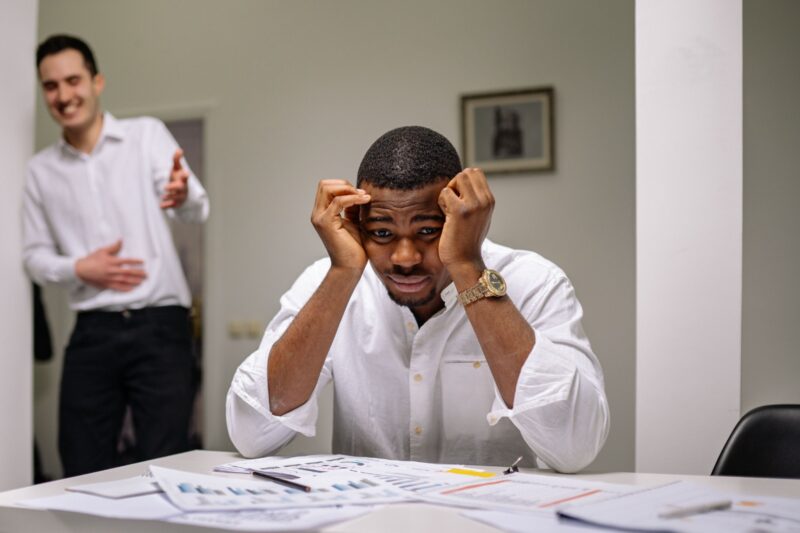
You have been told to push through. To toughen up. To stop making excuses and just get it done. And for years, maybe from the time you were a boy – that is exactly what you did. You powered through the missed deadlines by working late. You masked the forgetfulness with humour. You swallowed the frustration when your brain wouldn’t cooperate, and you told yourself that everyone else seemed to manage, so why couldn’t you. ADHD in men isn’t an issue, right? Surely you’d have been diagnosed by now?
Chances are you have spent your life believing that your struggles are a personal failing. They are not. ADHD is a neurodevelopmental condition that affects approximately 6% of adults, and current data shows that over half of all adults with ADHD were first diagnosed in adulthood, not childhood. Many of those adults are men who spent years compensating, masking, and burning out before anyone thought to ask whether ADHD might be part of the picture.
As a counsellor who works with neurodiverse adults and teens, and ADHD in Men so often, I see the toll this takes. The men who sit across from me are not weak. They are exhausted from carrying something they were never taught to name.
<h3> How ADHD Shows Up Differently in Adult Men
Most people’s understanding of ADHD still begins and ends with the hyperactive boy who can’t sit still in class. While hyperactivity is one part of the picture, ADHD in adult men often looks very different from the childhood stereotype. The restlessness is still there, but it goes inward: a mind that won’t switch off, a body that can’t sit through a meeting, a constant low-level agitation that others can’t see.
In adulthood, ADHD in men commonly shows up as:
- Difficulty following through on tasks, projects, or commitments, despite genuine intention and intelligence
- Chronic disorganisation that creates friction at work and at home, from forgotten bills to missed appointments
- Emotional outbursts, particularly anger or frustration, that feel disproportionate to the situation and are often followed by shame
- Restlessness that manifests as always needing to be doing something, risk-taking behaviour, or an inability to relax
- Impulsive decision making in finances, relationships, or career, including job-hopping and quitting impulsively
- A persistent, nagging sense of underachievement, even when others see success
- Difficulty listening during conversations, leading partners and colleagues to feel ignored or unimportant
Men with ADHD are more prone to emotional outbursts fuelled by frustration at real or perceived setbacks. Research shows that between 30% and 70% of adults with ADHD experience significant emotional dysregulation. In men, this is frequently misread as a “temper problem,” an anger issue, or a character flaw, when it is actually a neurological response. The anger arrives fast, feels overwhelming, and is often followed by deep regret. Without understanding the ADHD connection, many men spend years trying to “control their temper” through willpower alone, never addressing the underlying cause.
<h3> The “Man Up” Trap: Why Men Resist Diagnosis
Traditional ideas about masculinity teach men that being strong means being self-sufficient, emotionally controlled, and capable of handling anything life throws at them. A 2026 narrative review on men’s mental health found that many men have incorporated into their belief systems the idea that they must be strong and self-reliant, generating self-stigma if they perceive that they are not coping. Seeking help, especially for something emotional or psychological, is often seen as an admission of weakness, a threat to identity rather than a path to understanding.
This creates a painful double bind for men with ADHD. The condition itself causes genuine difficulties with emotional regulation, organisation, and consistency. But the cultural message says a real man should be able to manage all of these things without help. When he can’t, he doesn’t think, “Maybe my brain works differently.” He thinks, “I’m not trying hard enough.”
Many men with undiagnosed ADHD do not recognise their longstanding challenges as symptoms. Instead, they experience what clinicians describe as “hitting a wall”: a point where the coping strategies that got them through school and early adulthood simply stop working under the weight of adult responsibilities. A career, a relationship, a family, a mortgage, the cognitive load of adult life eventually overwhelms a system that was always running at capacity. When the wheels come off, the shame can be immense, because the man believes he should be able to handle what everyone else seems to manage effortlessly.
What Unmanaged ADHD Actually Costs Men
When ADHD goes unrecognised in men, the consequences are not abstract. They show up in concrete, measurable ways across every area of life.
At Work:
The World Health Organization estimates that adults with untreated ADHD lose an average of 22 days of productive work per year. Research from Harvard Medical School puts the annual household income loss at between $8,900 and $15,400 compared to peers without ADHD. Employees with ADHD are 60% more likely to be fired from a job and three times more likely to quit impulsively. For many men, this creates a pattern of starting strong and fading, job-hopping, conflict with management, or a gap between ability and achievement that feels impossible to close. The result is a deep sense of career shame, a feeling that they should be further along given their intelligence and effort.
In Relationships:
Unmanaged ADHD can create cycles of misunderstanding and frustration that are devastating to both partners. Research suggests that the marital maladjustment rate for couples affected by ADHD is close to 60%, and some studies indicate divorce rates approximately double those of the general population. Partners may feel unheard or neglected when the man with ADHD is distracted, forgets commitments, or struggles to be emotionally present. Meanwhile, the man with ADHD feels blamed for things he cannot easily control. Without understanding the ADHD dynamic, a painful parent-child pattern can develop in the relationship, with one partner managing and the other feeling managed. Traditional marriage counselling often does not help unless the ADHD itself is identified and addressed.
Mental Health:
Men with ADHD are three times more likely to experience depression than those without the condition. Up to half of all adults with ADHD will experience major depressive disorder at some point. For men, this depression is often masked by irritability, emotional withdrawal, overwork, or substance use rather than overt sadness. A meta-analysis found that 21% of people in substance abuse treatment have co-occurring ADHD, and men are disproportionately represented. The self-medication cycle, using alcohol, cannabis, or other substances to manage the restlessness, boredom, or emotional pain of ADHD, is common and rarely identified for what it is without a proper diagnosis.
And internally, the toll is a quiet erosion of self-worth. Years of “just try harder” messaging, combined with genuine neurological difficulty, leaves men feeling fundamentally broken. This is not the truth, but it becomes the story they tell themselves.
How Therapy Helps ADHD in Men
Asking for help is not weakness. It is one of the most practical, effective things a man with ADHD can do. Therapy provides structure, strategies, and a space to be honest without judgment.
1. Understanding Your Brain, Not Blaming Yourself.
The first step is psychoeducation: learning how ADHD actually works. When you understand that your difficulty with follow-through, emotional regulation, or organisation is neurological rather than moral, the shame begins to lift. Many men describe this moment as transformative, because for the first time, the problem has a name that is not their own.
2. Managing Emotional Dysregulation.
Therapy helps men develop practical tools for managing the intensity of their emotional responses, particularly anger and frustration. This includes nervous system regulation techniques such as grounding and breathwork, cognitive reframing to challenge automatic thoughts like “I’ve ruined everything,” and communication strategies that reduce conflict in relationships and at work. These are not about suppressing emotions. They are about understanding what is happening in your body and brain so you can respond rather than react.
3. Building Systems That Work for Your Brain.
Generic advice about discipline and routine often fails men with ADHD because it is not designed for how their brains process motivation and reward. The ADHD brain is driven by interest, urgency, novelty, and challenge, not by importance or obligation. In counselling, we develop practical, personalised strategies that work with your neurology rather than against it: external accountability structures, body doubling, time-blocking, breaking tasks into smaller steps, and learning to work with your energy cycles rather than forcing yourself into a one-size-fits-all schedule.
4. Addressing Masking and Burnout.
Many men with ADHD have been masking for years without knowing it. You may be experiencing what many clinicians now call quiet burnout, and it is closely linked to a pattern known as ADHD masking. Therapy helps you recognise where you are compensating at unsustainable cost, identify the beliefs driving that compensation (“I should be able to handle this”), and begin building a more sustainable way of living that does not require you to perform a version of yourself that leaves you depleted.
5. Repairing Relationships.
ADHD does not just affect the person who has it. It affects everyone around them. Therapy can help men understand how their ADHD patterns have impacted their relationships, develop better communication strategies, and, where appropriate, bring their partner into the conversation. When both people understand the ADHD dynamic, the cycle of blame and frustration can be replaced with collaboration and compassion.

What I Offer as a Therapist
I offer individual counselling for men navigating ADHD, whether recently diagnosed, long-diagnosed but struggling, or simply wondering whether ADHD might explain a lifetime of feeling out of step. In my practice, I provide:
- A straightforward, non-judgmental space where honesty is welcome and expected
- Support in understanding how ADHD affects your emotions, relationships, work, and self-image
- Practical, brain-friendly strategies for managing the daily realities of ADHD
- Tools for communicating more effectively with partners, family, and colleagues
- Couples counselling where ADHD is part of the relationship dynamic
Your children also have incredible gifts: creativity, problem solving, passion, and resilience. Understanding your own ADHD can also help you support the young people in your life who may share similar traits.
SADAG offers mental health resources across South Africa, and can be a useful starting point if you are looking for additional support.
Summary? Read this…
ADHD does not care about toughness. It does not respond to willpower alone. And “man up” has never been a treatment plan.
If you have spent years feeling like you are falling short despite giving everything you have, ADHD may be the reason. Not an excuse, but an explanation. And with the right support, it is something you can learn to work with rather than fight against. The research is clear: when ADHD is properly identified and supported, outcomes improve across work, relationships, mental health, and quality of life. You don’t have to keep doing this on your own.
I Help Men. Like You…
I’m Paula Marais, a registered specialist wellness counsellor based in Claremont, Cape Town. I hold an Honours degree in Psychology from Unisa and a Master’s degree in Creative Writing from UCT, and I am registered with the ASCHP. I offer individual and couples counselling, both in person and online, because I believe online sessions are equally as effective as meeting face to face.
If anything in this post resonated, I’d welcome the conversation. There’s no pressure and no script. I’m just a WhatsApp away on 072 633 7661, or you can email me at info@paulamaraistherapy.com.
#ADHDInMen #MensMentalHealth #ADHDAwareness #ADHDAdults #ADHDCounselling #MenAndADHD #EmotionalDysregulation #NeurodiversitySupport #ADHDTherapy #ADHDRelationships #PaulaMaraisTherapy #ClaremontTherapy #CapeTownTherapist #MentalHealthCapeTown #NeurodiversityCapeTown #ADHDAndDepression
Comments
One response to “ADHD in Men: Why “Man Up” Is the Worst Advice You’ve Ever Been Given”
[…] The anger is the part everyone notices. Shortness with the children. Rage in traffic that would have been irritation a year ago. A fuse that burns faster every month. Most men I see have been told repeatedly that they have a temper problem. Fewer have been asked what’s underneath it. […]